

Nerves & Movement Disorders: Neuropathy, MS & Parkinson's Care
Changes in sensation, weakness, tremors, or balance can disrupt daily life more than people realize. Many patients don’t notice symptoms building until they affect confidence or safety. We help you understand what your nerves are telling you — and what can be improved.


Advanced Evaluation for Tremors, Balance Issues, Nerve Pain & Muscle Weakness
Conditions We Commonly Evaluate


Peripheral Neuropathy
Parkinson’s Disease & Movement Disorders
Multiple Sclerosis (MS)
Gait & Balance Problems
Tremors or Involuntary Movements
Muscle Weakness or Fatigue
Nerve Compression Conditions (Carpal tunnel, pinched nerves)
A note we often share with patients:
Nerve and movement symptoms often appear gradually — a mild tremor, subtle imbalance, or a sensation that “something feels off.” People frequently write these changes off as aging or stress. The truth is, small nerve changes can give us important clues early on. With the right testing, there is often a straightforward explanation and clear next steps.
If you’re also experiencing headaches, cognitive changes, or abnormal scans, you may benefit from our Head & Brain, Neuro-Oncology, and Diagnostics & Treatment services for a more complete evaluation.
What Happens During Your Evaluation
Step 1: Understanding Your Symptoms
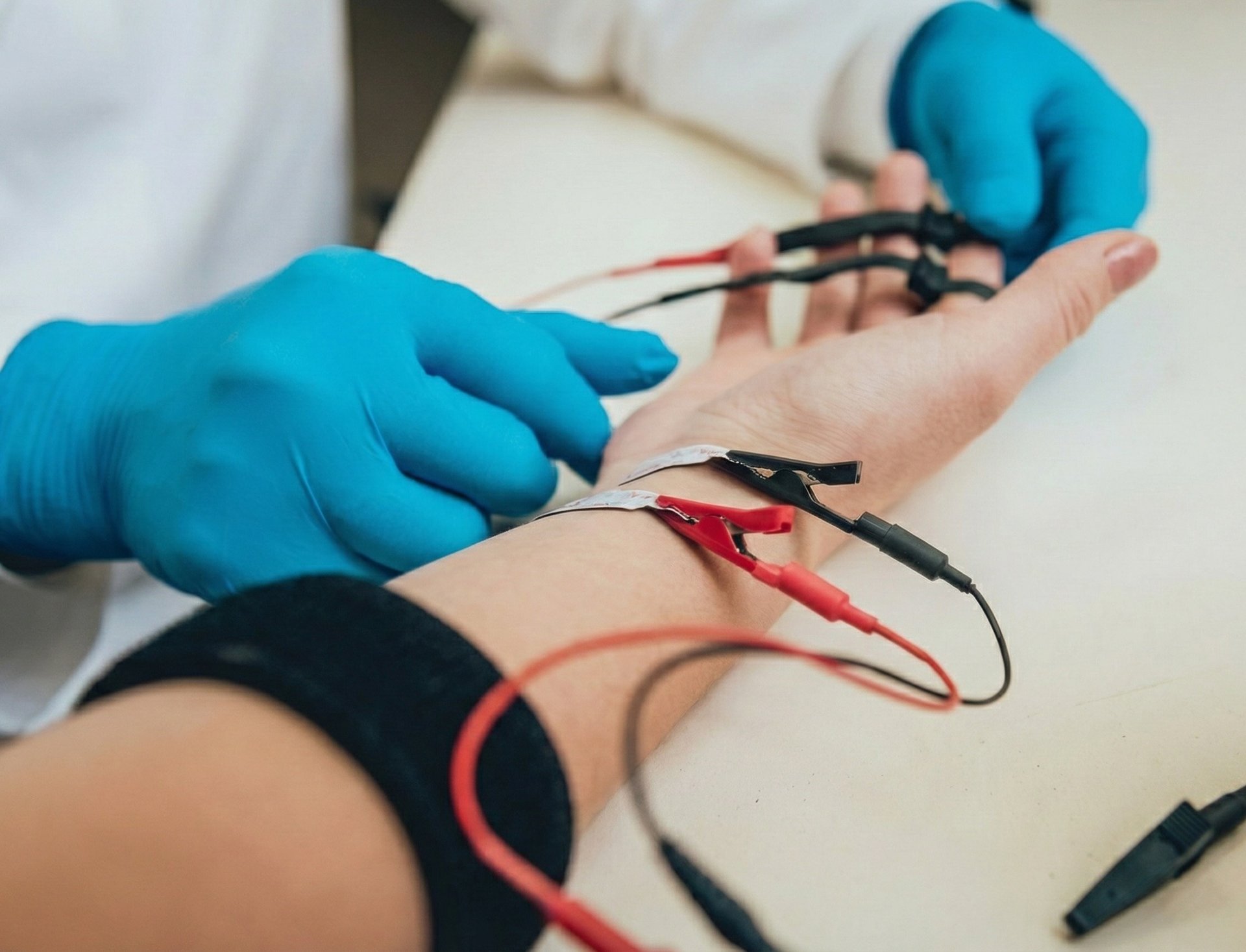
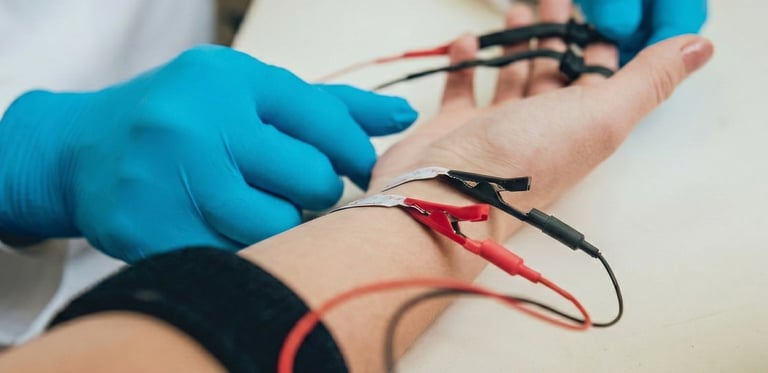
Step 3: On-Site Nerve Studies or Imaging (If Needed)
Many people come in after months of dealing with numbness, tingling, tremors, or changes in balance without knowing how these symptoms will be evaluated. To help you feel more prepared, here’s a clear overview of what usually happens during a Nerves & Movement visit and how we uncover the source of your symptoms.
If we need more information, we offer same-day EMG/NCS testing, MRI, or bloodwork. These tools help us pinpoint the exact source of nerve or movement changes.
We assess nerve function, reflexes, balance, coordination, sensation, muscle strength, and walking patterns. This helps us understand which nerves or areas of the nervous system may be involved.
We begin by listening carefully to what you’ve been feeling — when symptoms started, what makes them better or worse, and how they affect walking, coordination, or daily tasks. Your story guides the entire evaluation.
Step 2: Neurological & Movement Testing
Step 4: A Clear, Personalized Plan
Before you leave, we review everything together — what we found, what may be causing your symptoms, and what steps will help. Many patients say this is the first time their symptoms have been clearly explained.
When to Seek Help — Even If Your Symptoms Seem Mild


Neuropathy Symptoms
Burning or tingling
Tightness or numbness
Nighttime discomfort
Loss of foot sensation
Movement or Tremor Symptoms
Shaking at rest or with action
Stiffness or slowed movements
Difficulty with handwriting or buttons
Arms that don’t swing normally while walking
MS-Related Symptoms
Sudden numbness or weakness
Visual changes
Fatigue or imbalance
Symptoms that come and go
Balance Decline
Feeling “wobbly”
Leaning or drifting while walking
Needing support from walls
Sudden falls or near-falls
People often wait too long because symptoms feel subtle or easy to explain away. Here are signs worth checking:
If something about your movement feels different — trust that it’s worth checking.
subtle changes often carry important clues.
How We Approach Treatment
Treatment depends on the underlying cause, but may include:
Nerve pain or neuropathy medication
MS disease-modifying therapy
Parkinson’s treatment & tremor management
EMG-guided diagnosis
Physical therapy for gait/balance
Vitamin or metabolic deficiency evaluation
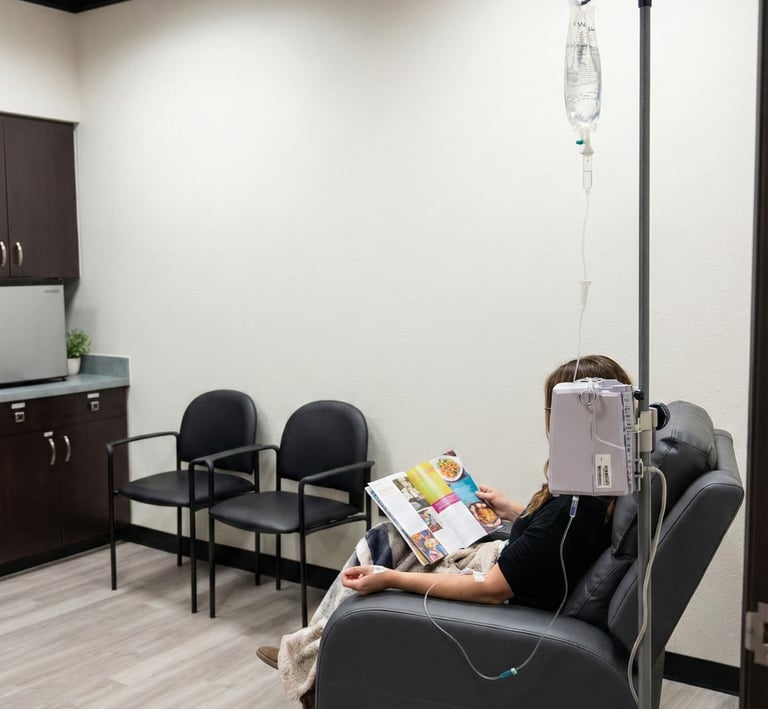
Infusion therapy when appropriate
Lifestyle adjustments that actually improve symptoms
Fall-prevention strategies
Treatment for nerve compression (carpal tunnel, radiculopathy)
Our goal is to help you feel steadier, safer, and more confident moving through daily life.
“Even small changes in movement mean something.”
Early evaluation can prevent long-term nerve damage and help restore mobility and independence.
Frequently asked questions
What symptoms suggest I may have neuropathy?
Neuropathy often causes burning, tingling, numbness, electric-like sensations, coldness, or reduced sensation in the hands or feet. Symptoms worsening at night are especially common.
How do I know if a tremor is serious?
A tremor that appears at rest, affects daily tasks, or worsens over time should be evaluated. Tremors can be caused by Parkinson’s disease, essential tremor, medication effects, or nerve disorders.
What’s the difference between balance problems and dizziness?
Dizziness feels like lightheadedness or spinning, while balance problems feel like unsteadiness, drifting, or trouble walking. Both can be signs of nerve or movement disorders.
What conditions require EMG or nerve conduction testing?
EMG/NCS is used for neuropathy, radiculopathy (pinched nerves), muscle weakness, carpal tunnel syndrome, tremors, and unexplained numbness.
What early signs of Parkinson’s should I look for?
Early signs include resting tremor, slowed movements, stiffness, reduced arm swing while walking, smaller handwriting, and decreased facial expression.
Can balance and gait problems be treated?
Yes. Treatment may include medication, physical therapy, nerve testing, fall-prevention strategies, and addressing underlying causes like neuropathy or MS.
Are numbness and tingling always caused by nerve damage?
Not always. These symptoms can also come from vitamin deficiencies, autoimmune issues, medication effects, or circulation changes. An evaluation helps determine the cause.
What symptoms could suggest multiple sclerosis (MS)?
Sudden or recurring numbness, weakness, balance problems, vision changes, fatigue, or symptoms that come and go may signal MS and should be assessed promptly.
Do I need a referral for neuropathy or tremor evaluation?
No. You can schedule directly with Charis Neurology without a referral.
Can nerve or movement disorders improve with treatment?
Many can. Neuropathy, tremors, MS, and Parkinson’s-related symptoms often respond well to medication, therapy, targeted testing, and lifestyle adjustments.

Related Neurology Services
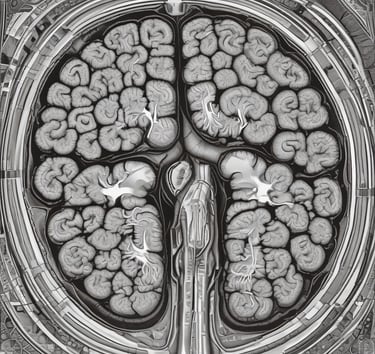
Explore additional care options that complement your Nerves & Movement evaluation, including Head & Brain, Neuro-Oncology, and full Diagnostics & Treatment.
Head & Brain
Short, clear evaluation for headaches, seizures, memory changes, and cognitive symptoms.
Learn more >


Comprehensive evaluation for brain tumors, masses, and neurological changes — from first symptoms to ongoing management.
Learn more >
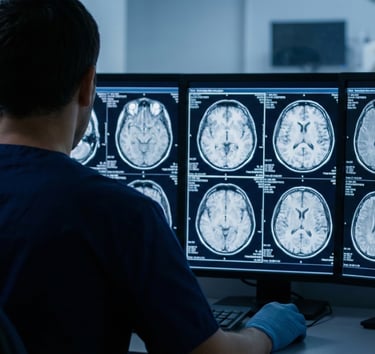
Same-day MRI, EEG, and EMG/NCS testing available onsite to help diagnose symptoms accurately and quickly.
Learn more >



Explore our full range of neurology services.
View All Services >
Request an Appointment or Ask a Question
Our team responds within one business day.
For urgent concerns, please call us directly.
Phone
Location
Serving Central Florida
Seminole • Orange • Volusia • Lake County
Please do not submit sensitive medical information through this form.
For emergencies, call 911.
Contact Us
Serving Central Florida
Seminole County
Lake Mary, Sanford, Longwood, Oviedo, Altamonte Springs, Winter Springs, Casselberry, Heathrow, Wekiwa Springs, Forest City, Sanlando Springs
Volusia County
Deltona, Orange City, DeBary, Lake Helen
Orange County
Orlando, Winter Park, Maitland, Apopka, Eatonville
Patient Center


Where precision medicine meets genuine compassion. We provide end-to-end diagnostics and treatment for the entire family under one roof.


© 2026 Charis Neurology. All rights reserved.
If you are experiencing a medical emergency, please dial 911 or go to the nearest emergency room. Do not use this website for urgent medical needs.